Family ID for Vaccination Planning: A Local Health Guide2026
Planning a local vaccination drive can be challenging, but Family ID for Vaccination Planning helps health workers track who needs vaccines and where they live. A PPP Family ID, like Haryana’s Parivar Pehchan Patra (PPP), can make this process easier and more organized. This guide explains how Family ID helps plan better vaccination drives in a simple way.
What Is a Family ID?
A Family ID is a unique code given to each family that stores verified information like names, age, Aadhaar numbers and contact details. In Haryana, this system is called Parivar Pehchan Patra (PPP). It helps connect families with government services without repeating paperwork.
Family ID for Vaccination Planning: Why It Matters
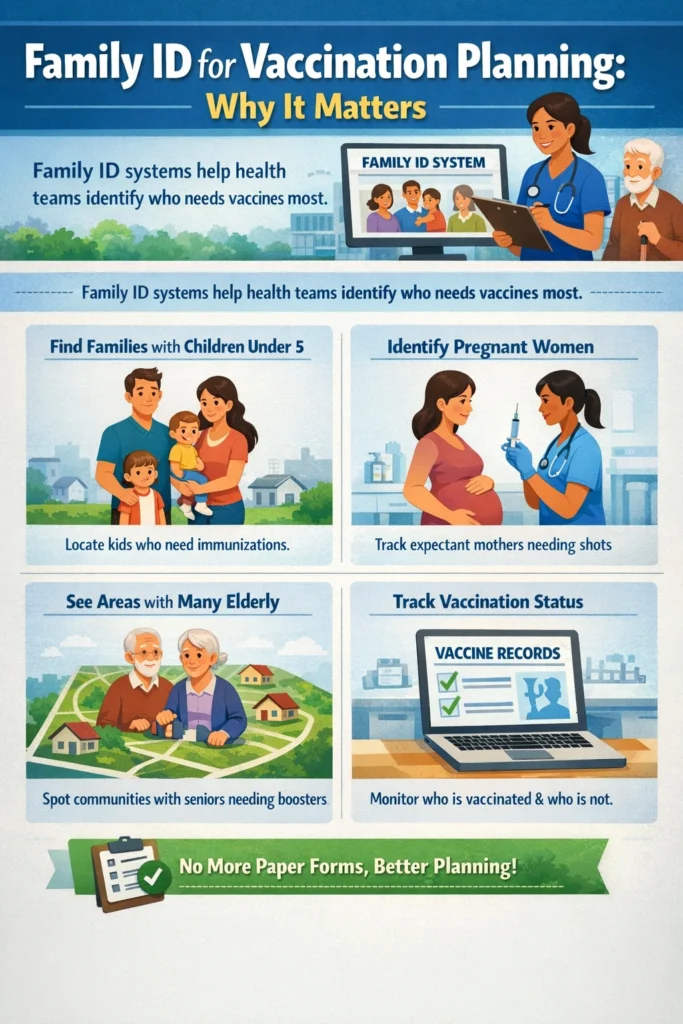
To plan a successful vaccination drive, health teams need a list of people who should get vaccines — especially children, pregnant women, and elderly people. Family ID systems store household demographic data that helps officials identify who needs vaccines most.
For example, if a health team wants to plan a child immunization day, they can use Family ID data to:
Find families with children under 5
Identify pregnant women who need specific shots
See areas with many elderly people who need booster vaccines
Track who has already gotten vaccines and who hasn’t
Using Family ID means planners don’t have to collect all these details again on paper.
How Family ID Helps Health Workers in the Field
When health workers arrive for a vaccination camp, they can use the Family ID number to check a family’s details immediately. This saves time and helps confirm eligibility without filling out long forms.
Tracking attendance also becomes easier. Each time someone visits the camp, their Family ID can show up in the system, showing what vaccines were given and who missed them. This helps health teams follow up with families who still need shots. Family ID systems are not only for regular households. In our guide Family ID for Orphanages and Group Homes in Haryana Guide, we discuss how institutions can also benefit from the system.
Better Planning with Real Data
Most traditional vaccination drives plan based on estimates — numbers guessed from old records or community memory. But Family ID provides actual verified data.
Health planners can use this data to:
Know which neighbourhoods have low vaccination coverage
Set up camps in places where many people have not yet been vaccinated
Allocate vaccines based on real demand
Reduce waste of unused vaccines
When health planners know where people live and what they need, campaigns run more smoothly and reach more people.
Quick Tips for Health Teams Using Family ID
If Family ID details (phone, address, age, etc.) are wrong, Family ID for Vaccination Planning can get delayed. Make sure information is updated first.
If the health team can send messages (SMS) using the phone numbers linked to Family ID, people are more likely to come for vaccines.
Volunteers should know how to use Family ID numbers quickly so there’s no delay at vaccine stations.
After a drive, look at data to find households that didn’t attend and plan a follow‑up.
What This Means for Your Community
Using Family ID for vaccination planning helps health teams reach the right people at the right time. It moves health drives from guesswork to data‑driven planning. That means:
Instead of checking the old paper lists or trying to guess how many need what vaccine, Family ID gives up‑to‑date, real information that helps planning and execution.
FAQs About Family ID for Vaccination Planning
Final Words
Family ID systems like Parivar Pehchan Patra in Haryana support Family ID for Vaccination Planning by giving health workers and officials organised, verified family data. This helps them identify who needs vaccines, reduces guesswork in planning, and ensures more people in the community receive vaccinations on time.
If your area uses Family IDs, make sure everyone’s information is correct — it can make a big difference when planning health initiatives like vaccine camps.


