
Mandatory PPP: Effects on Power, Water, and Scholarships2026
The Parivar Pehchan Patra (PPP) Haryana Family ID is already used to connect families with government schemes and benefits. But what would happen if the government made it Mandatory PPP to access even more services — like power connections, water supply, school or college scholarships, and other essential utilities? Let’s break it down in a way that’s easy to understand.

What Does “Mandatory PPP” Really Mean?
Making Mandatory PPP means you would need a Family ID before you could access certain government services or benefits. Right now, PPP isn’t legally compulsory just to live your life, but many schemes expect you to have it if you want benefits. In the past, courts have said that essential services shouldn’t be denied just because someone doesn’t have PPP — so it can’t fully block basic rights.
If the government decides to link more services to the PPP system, here’s what might happen to everyday people.
More Convenience — One ID for Many Services
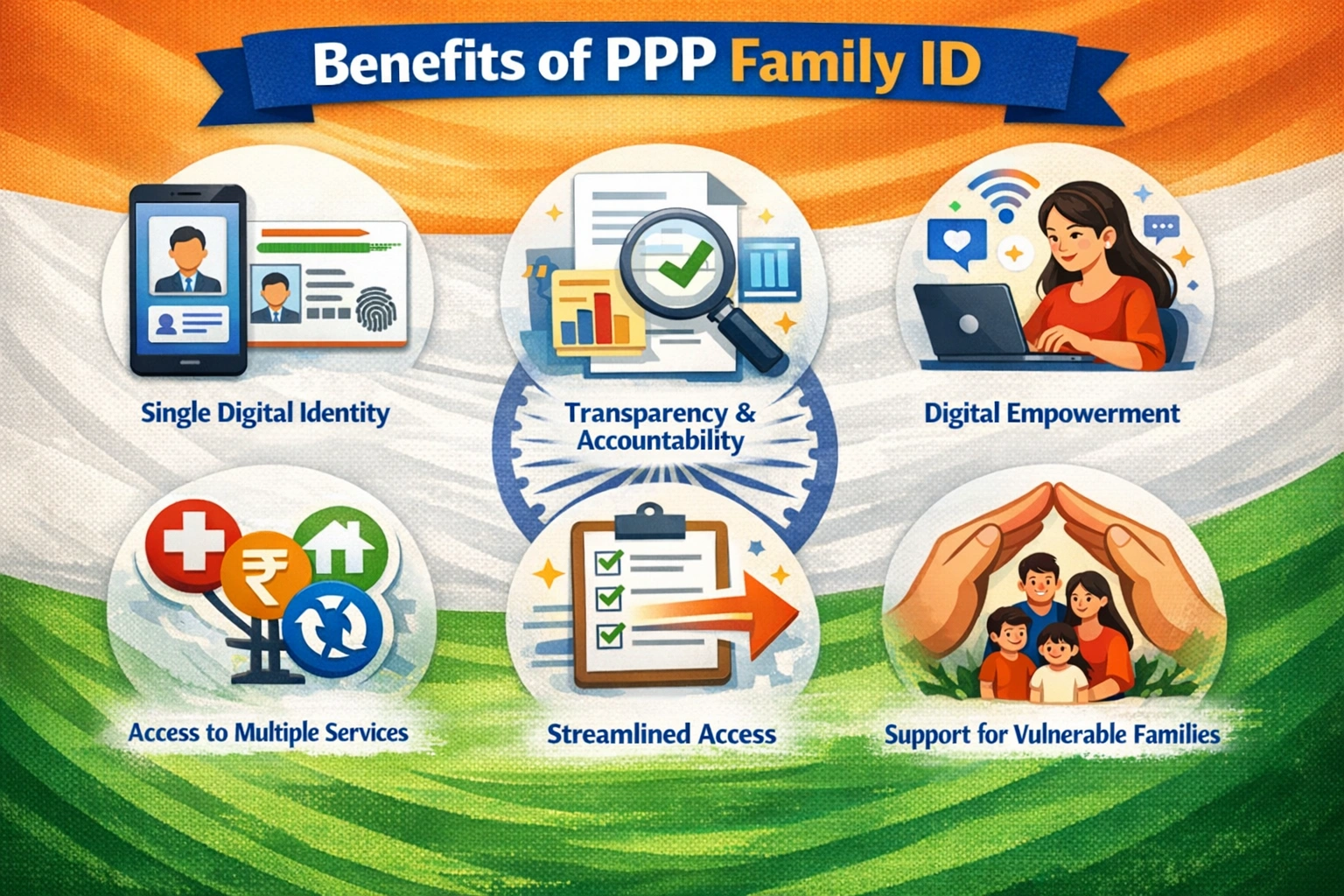
If PPP becomes mandatory for things like power, water, and scholarships, the biggest benefit is simplicity:
submit the same documents again and again.
multiple services could be checked automatically using the Family ID.
won’t have to verify your identity separately for each service.
This could save a lot of time and reduce paperwork when applying for things like school scholarships or utility connections.
Tip: If Mandatory PPP is enforced, make sure your Family ID details (income, address, family members) are always correct. Mistakes can cause delays or denial of services. Learn what to do if Family ID shows ineligible status.
Faster Service Delivery
When your Family ID is verified in one central database, government offices can check your details quickly. This means:
Quicker approval for housing services, electricity, and water connections.
Faster processing of applications for student scholarships or welfare schemes.
Reduced waiting time at service center.
Centralized data helps avoid repeated verification again and again.
Risk of Exclusion If Data Is Wrong
There can be downsides too. If your PPP data is incorrect — say your income, caste, or family members are wrong — you might get denied a service you should qualify for.
Errors in the Family ID data have caused serious problems in the past, including wrongful exclusion from welfare schemes because a person was incorrectly marked in the system.
Tip: Regularly check your Family ID details and update them if anything changes, like your income or a new family member, so you don’t miss out.Check how PPP affects families who move out of the state.
Higher Dependence on Digital Access
Making Mandatory PPP for more services would increase reliance on online systems. That’s good if you have:
But people in rural areas or those without easy internet access might struggle unless they get help from local service centres.
Tip: If you find digital updates hard, visit your nearest CSC for assistance. They can help you update or correct details in your PPP.
Better Targeting of Benefits
One big advantage of linking PPP to more services is better targeting. Governments can use the data in Family ID to:
Automatically check eligibility for utility subsidies (like electricity or water).
Determine who qualifies for scholarships based on verified income information.
Reduce fraud and ensure benefits go to deserving families.
This reduces duplication and makes service delivery more efficient.
Privacy and Data Concerns
With more services relying on PPP data, there is more personal information stored in government systems. Some people worry about privacy and how their data is used. That’s why it’s important for:
If PPP becomes more widely Mandatory PPP, these conversations around privacy and data protection will become even more important.
No Immediate Loss of Basic Services
Even if PPP is linked to many services, courts have been clear in the past that basic services should not be denied to people who don’t have a Family ID. People have challenged Mandatory PPP requirements in courts before, and the system was clarified so that essential services cannot be blocked.
This means that while PPP may become more important to access benefits quickly, your right to basic services should still be protected.
Frequently Asked Questions
Final Thoughts
If the government makes Mandatory PPP for more services, it could lead to faster service delivery, less paperwork, and better targeting of benefits. However, it also comes with challenges, such as ensuring your data is correct and managing concerns around privacy. By staying proactive and keeping your Family ID updated, you can avoid the risks and enjoy the benefits of this digital integration.


