
How Family ID System Supports Orphaned and Single-Parent
If your family situation is different—such as being a single parent or a child who has lost both parents—you may be wondering how the PPP Family ID (Parivar Pehchan Patra) system handles your case. The good news is that the system is designed to include orphaned children and single-parent households, but it is important to understand the eligibility rules and required steps to ensure your family record is correctly updated and benefits are not missed. The Family ID system supports orphaned children and single-parent families, but there are still things you should know and do to ensure you’re properly covered.
What kinds of “non-typical” family units are included
Here are common special-cases the system should cover:
Children who have lost both parents, or whose parents are missing.
Children living with a single parent (mother or father) because of death, separation, or other circumstances.
Separated couples or families that are headed by one parent only.
Families where one member is the sole adult or adult staying alone but still eligible for benefits.
Orphan children resident in institutional care (orphanages / child-care homes) who lack a typical “household” structure.
What the official treatment is & what the rules say
Documents Required for Orphan/Single-Parent Family ID
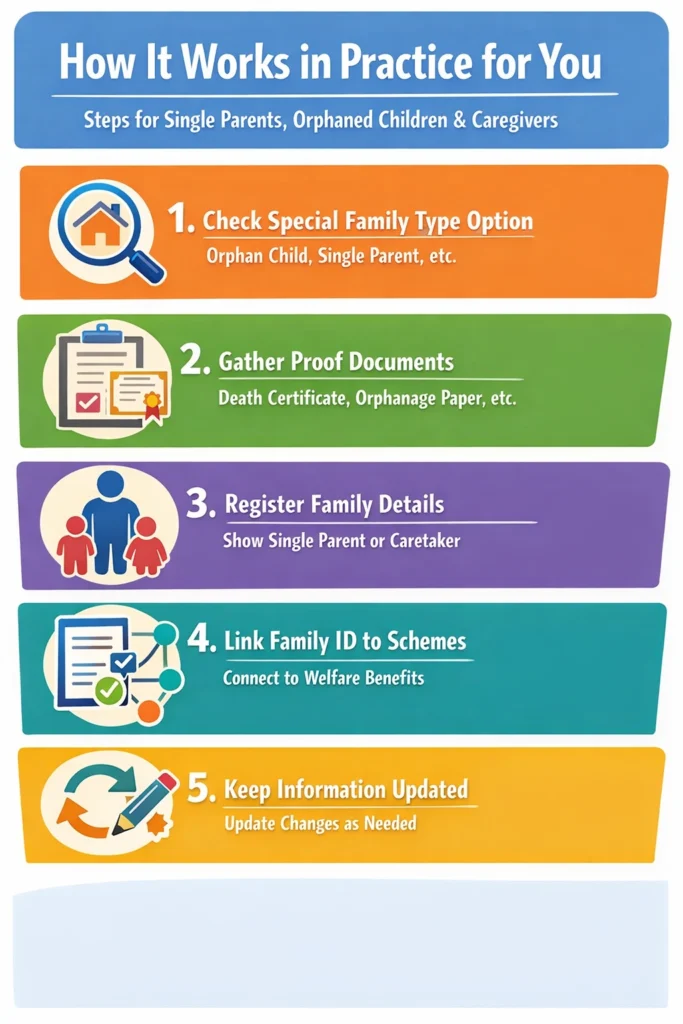
How it works in practice for you
Here’s how you should go about it if you fall into one of these categories:
Check if your state’s Family ID portal has a “special family type” option, like orphan child, single parent household, or similar.
Gather proof: For an orphan child, there might be a certificate from the child-welfare board or orphanage. For single-parent households, you might need evidence of the other parent’s absence (death certificate, separation certificate, etc.).
Register accordingly: When applying for Family ID, while filling the family head and members, if you’re a single parent or alone, make sure your entry reflects that (e.g., only you + children). Or if you’re in an orphanage, the caretaker may be listed.
Link your Family ID to schemes: Once you have your Family ID, the system can link you to welfare benefits just like any other family—but your eligibility may depend on your status (orphan, single parent).
Keep your data updated: If your situation changes (e.g., you adopt a child, a parent re-enters the household, or a child becomes an adult), you will need to update your Family ID profile to avoid missing benefits.
Learn how Family ID works even without Aadhaar or updated Aadhaar.
Government Schemes for Orphans & Single Parents
Bal Seva Ashram Programs: Support for children in care homes or orphanages.
Single-Parent Welfare Schemes: State-level subsidies for education, health, and food.
Child Welfare Board Benefits: Monthly allowances, scholarships, and special care programs.
National Orphan Support Programs: Includes education aid, medical support, and vocational training.
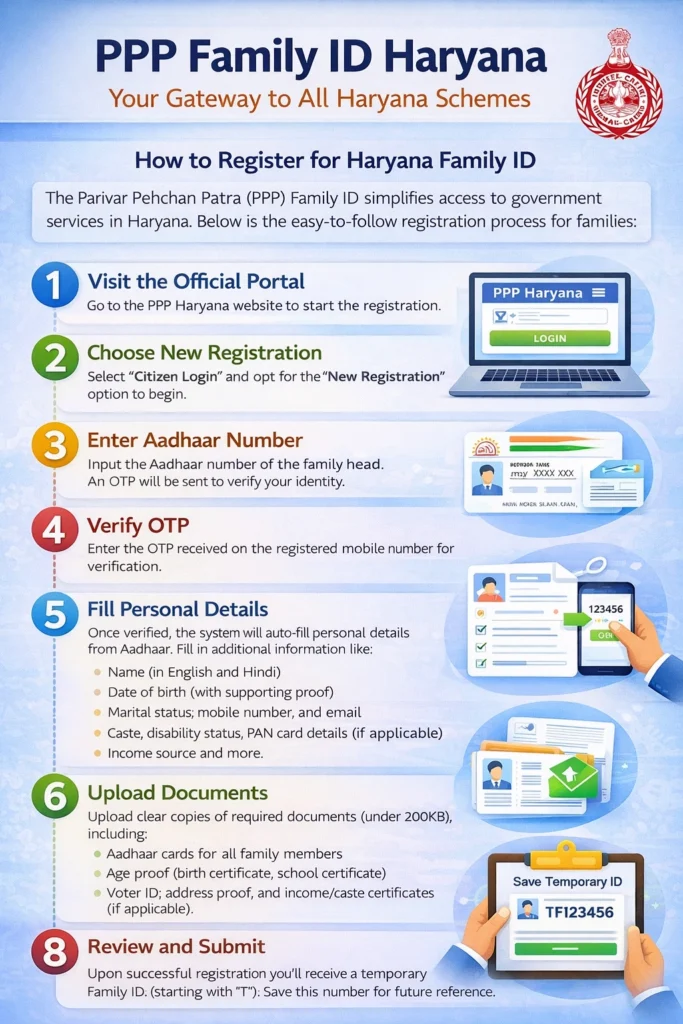
Step-by-Step Registration Process
Visit the official Family ID/PPP portal.
Select New Family Registration.
Choose the appropriate family type (orphan, single-parent household).
Fill in family details accurately.
Upload required documents.
Submit the form and note the Family ID generated.
Link your Family ID to relevant welfare schemes.
Check the portal periodically and update details when changes occur.
Tips to make sure you’re getting full benefit
FAQs
Final thoughts
Having a non-traditional family structure should not prevent you from accessing benefits under the Family ID system. The scheme is designed to include orphaned children, single-parent households, and separated families. The key is to register your household under the correct category and keep your information updated whenever your situation changes. This ensures your family is properly recorded in the system and not excluded from welfare benefits.


