PPP Family ID Haryana: Tool for Community Resource Mapping
Finding help shouldn’t feel like solving a puzzle. In Haryana, many families need support—whether it’s food, healthcare, education, pensions, transport, or senior care. Often, the problem isn’t that services don’t exist, but that families don’t know where to find them. Local departments may also lack a clear picture of which families need which services.
This is where PPP Family ID Haryana (Parivar Pehchan Patra) comes in. It’s a unique 8-digit identifier (or temporary 9-digit for non-permanent residents) that links families to government schemes. It makes it easier for authorities to plan services and ensures families get the support they are eligible for. Community Resource Mapping is the process of identifying and organizing local services like health, education, jobs, and support to improve access and planning.
What Is PPP Family ID Haryana?
PPP Family ID Haryana is like a digital identity for each family. Instead of managing multiple forms and schemes separately, the Family ID connects all basic family information in one system.
It helps answer simple but important questions: who lives in the household, what services they’re receiving, which benefits they might still need, and which offices or service centers are closest. This way, families get help faster, and departments can plan efficiently.
Community Resource Mapping Made Simple
Community resource mapping is about showing all services available in a local area. In Haryana, this can include health clinics, schools, food support centers, child and senior care services, and local government offices.
A good map doesn’t just give addresses—it tells families what services are available, who can use them, opening hours, contact details, and eligibility. This makes it easier for families to find the right help.
How PPP Family ID Haryana Helps
A regular resource map shows what exists, but combining it with PPP Family ID Haryana shows who needs it most.
For example, one area may have several health centers, but families in a particular ward might still be far from care. Another ward might have many children but no nearby child care center. Using Family ID data helps local leaders plan:
Benefits of Using PPP Family ID Haryana
Authorities can see which families need support, whether it’s education, health, food, pensions, or transport.
Families don’t have to visit multiple offices—they can get guidance to the right schemes faster.
Duplicate benefits are reduced, and support reaches families who need it most.
Departments can identify underserved areas and allocate resources efficiently.
Digital maps can be refreshed regularly, keeping service information accurate and reliable.
How Local Teams Can Use It
Local teams can follow a simple process:
Map available resources: Collect details of services—addresses, phone numbers, opening hours, eligibility, and cost.
List family needs: Identify the most common requirements like food, healthcare, education, pensions, child care, and senior support.
Connect safely: Link PPP Family ID Haryana with resource data, while sharing only area-level trends to protect privacy.
Spot gaps: Compare family needs with services and identify underserved areas.
Update regularly: Keep data fresh to reflect new schemes or changes.
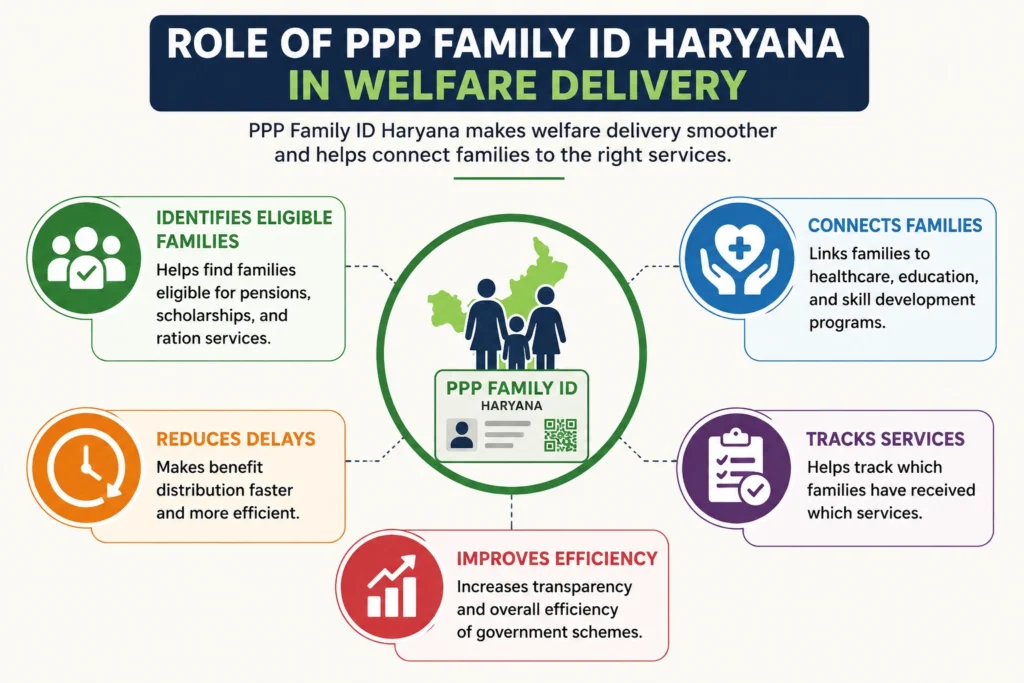
Role of PPP Family ID Haryana in Welfare Delivery
PPP Family ID Haryana makes welfare delivery smoother by helping departments understand family needs. Key points:
Identifies eligible families for pensions, scholarships, and ration services
Connects families to healthcare, education, and skill development programs
Reduces delays in benefit distribution
Helps track which families have received which services
Improves overall efficiency of government schemes.
Why Local Community Resource Mapping Is Important for Haryana Families
Community Resource Mapping services locally helps families access support quickly and easily. Benefits include:
Shows nearby hospitals, schools, Anganwadi centers, and welfare offices
Reduces confusion and unnecessary travel
Helps families discover available skill centers, transport, and child care facilities
Supports better planning for emergency or urgent needs
Ensures underserved areas are identified and prioritized
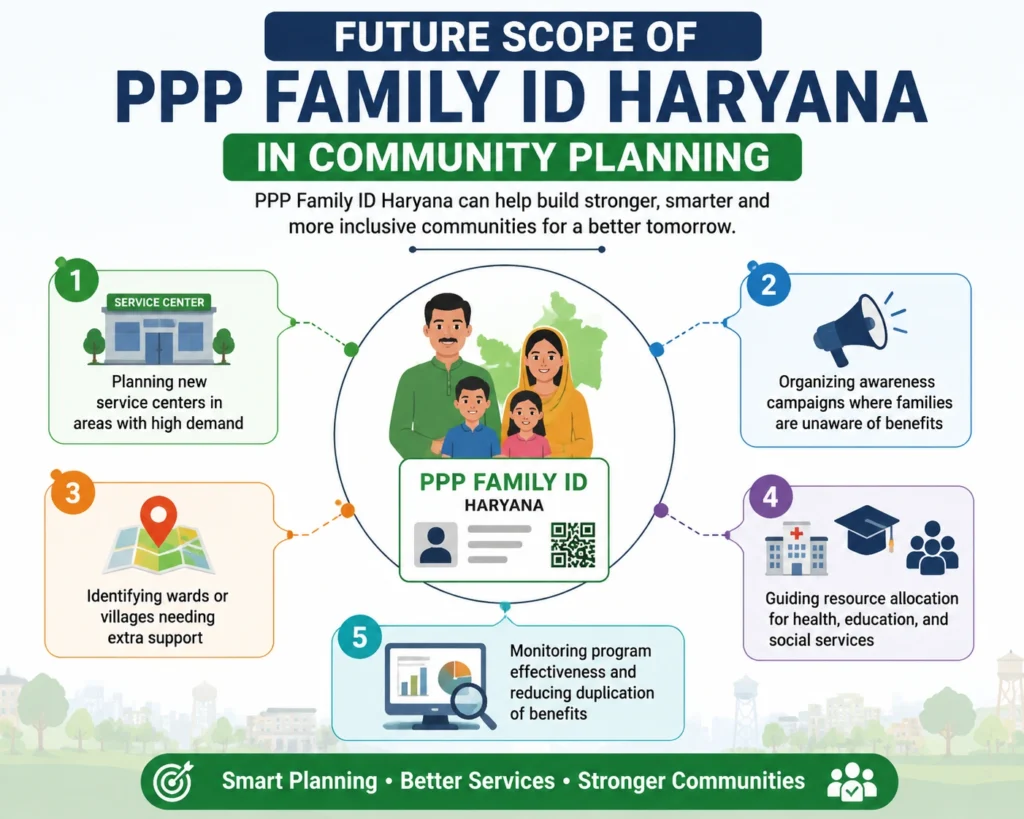
Future Scope of PPP Family ID Haryana in Community Planning
PPP Family ID Haryana can also help long-term community planning. Potential uses include:
Planning new service centers in areas with high demand
Organizing awareness campaigns where families are unaware of benefits
Identifying wards or villages needing extra support
Guiding resource allocation for health, education, and social services
Monitoring program effectiveness and reducing duplication of benefits
Tips for Families and Departments
Privacy Matters
Family data is sensitive. PPP Family ID Haryana must be used responsibly. Personal details should never be public. Only aggregated area-level information should be shared. Departments should also allow families to correct their information and take consent where required.
Challenges to Keep in Mind
FAQs About Community Resource Mapping
Final Thoughts
PPP Family ID Haryana is more than just a number. It connects families to the right government schemes, reduces duplicate benefits, and helps authorities plan community resource mapping and services better. With the right approach, no family in Haryana is left behind, and communities can provide timely, effective support where it’s needed most.


