
How Often PPP Data Syncs with Other Government Departments!
If you’re using the PPP Family ID (Parivar Pehchan Patra) to access government services, you might wonder how often your family data gets shared with other government departments and updated across systems.
In short, PPP Data Syncs automatically and regularly with certain government databases so that departments can quickly verify information and deliver services without repeated paperwork. While there isn’t an exact public schedule for how often this syncing happens, understanding the process helps you know when your updates will be recognized by different systems.
What PPP Data Sync Means
Your Family ID contains essential details about your family — like members, address, Aadhaar, income and key life events such as births or deaths. This information is held in a central database that is linked with other government systems so various departments can check your details without asking for extra documents.
When PPP data syncs with other departments, it means:
Family ID information is shared or verified behind the scenes.
Other departments use the Family ID as a reliable source.
You don’t have to upload the same proof again when applying for services like pensions, scholarships, or certificates.
How PPP Sync Works in Practice
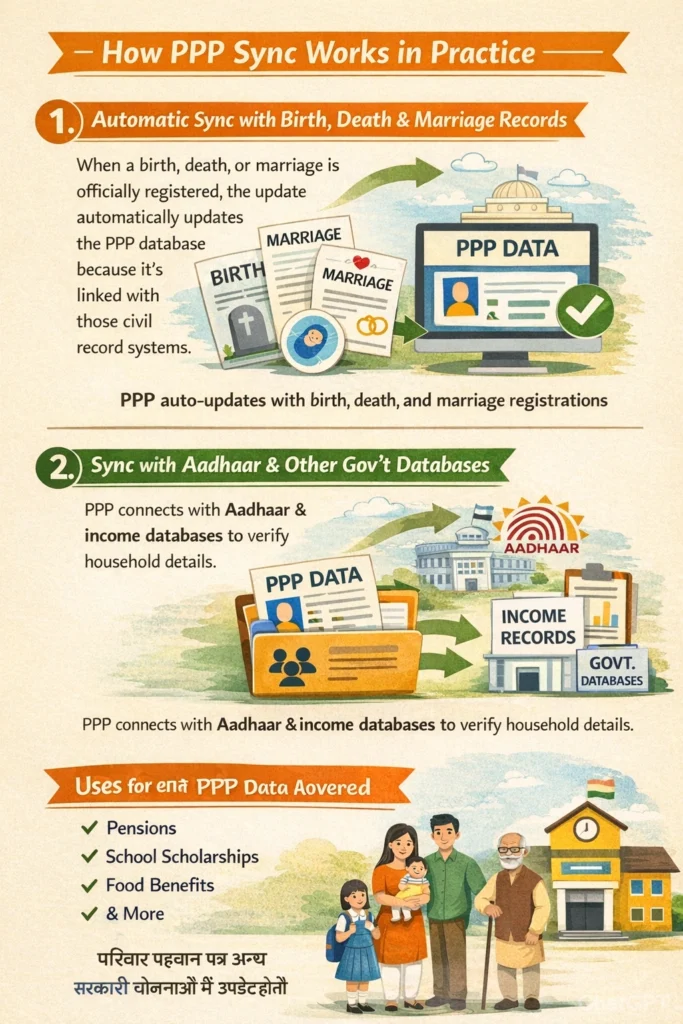
Automatic Sync with Birth, Death and Marriage Records;
When a birth, death, or marriage event is registered officially, that change automatically updates the PPP database because it’s linked with those civil record systems. This means your PPP data stays current whenever important life events happen.
Sync with Aadhaar and Government Databases;
PPP works with verified databases like Aadhaar and income records to confirm who lives in your household. This helps government departments identify eligibility for welfare programs and reduces the need for repeated document submissions. PPP Data Syncs information is used for schemes like pensions, school scholarships, food support, and more.
Sync Frequency and Timing
Most syncing happens automatically whenever data is updated. For example:
Although there’s no official public schedule saying “every hour” or “once a day,” the system is built to update itself automatically as new verified information comes in, reducing delays and repeated checks. And Also learn, Family ID plays an important role in determining eligibility for Haryana state quota seats in colleges.
Why PPP Data Syncs Matters
When your PPP data is current and synced, departments don’t need to ask for the same proof again and again. This speeds up approvals for welfare programs, pensions, certificates, and other services.
Automatic syncing with Aadhaar and civil record systems reduces mistakes. Your verified information becomes a trusted reference for government programs.
Once your data is in the system and synced, you won’t need to submit the same documents for different services. Government departments retrieve what they need from the synced PPP database.
Will All Departments See My Updated PPP Info Instantly?
Not always instantly. In most cases, once your updated information is verified in the PPP system, it becomes available to other connected government departments shortly after. However, some departments may take a little time to refresh their databases or pull the latest data from the PPP system when processing applications or verifying eligibility.
Do I Need to Update Details Separately in Every Department?
No, you usually don’t need to update your information separately in every government department. Once your details are updated and verified in the PPP Family ID system, the updated data becomes available to other connected departments. This centralized system saves time and prevents the need to submit the same documents multiple times for different services.
Tips to Make Sure Your PPP Data Syncs Smoothly
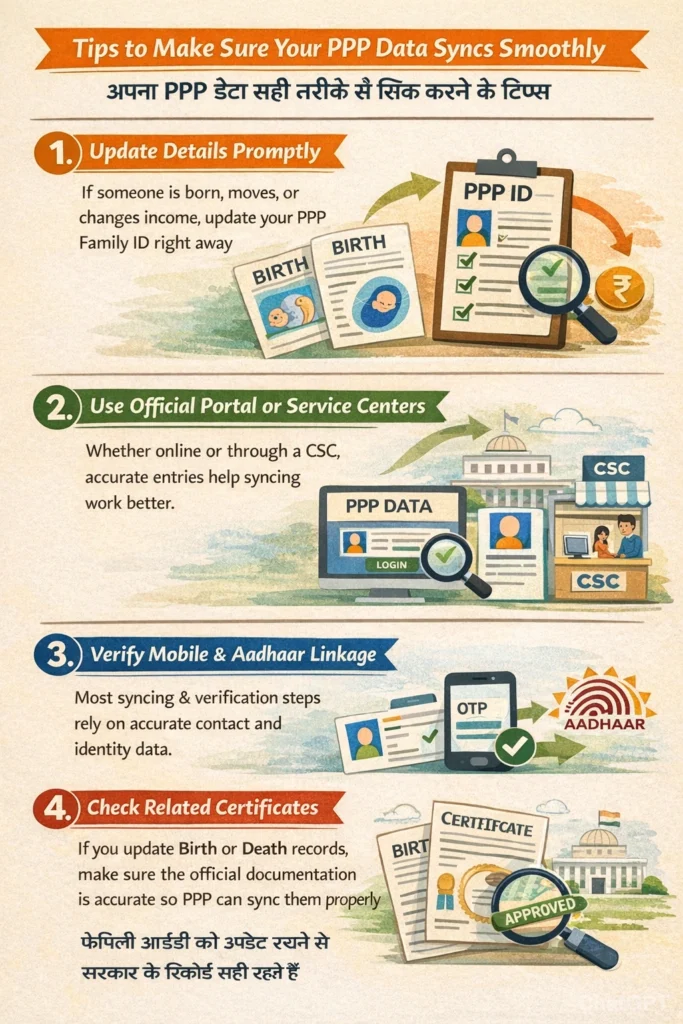
Update details promptly – If someone is born, moves, or changes income, update your PPP Family ID right away.
Use the official portal or service centers – Whether online or through a CSC, accurate entries help syncing work better.
Verify your mobile number and Aadhaar linkage – Most syncing and verification steps rely on accurate contact and identity data.
Check related certificates – If you update Birth or Death records, make sure the official documentation is accurate so PPP can sync them properly.
How Updates Reflect in Other Departments
When your PPP Data Syncs and updated;
This seamless syncing is one of the main advantages of having a reliable PPP Family ID — it reduces repeated verification and makes government processes faster and friendlier.
Common Questions People Ask
Summary:
Your PPP Data Syncs and shared with other government systems automatically to make benefit delivery faster and more accurate. Although there’s no public timetable for syncing, updates happen as verified information enters the system.
Keeping your PPP information up‑to‑date and accurate ensures everything works smoothly — from pension delivery and welfare benefits to certificates and admissions.


